Research Integrity platform, from zero
Morressier · Senior Product Designer · UX Researcher · 2023–2024
- Scope
- MVP, beta, integration, full product
- Team
- 2 full-stack engineers, QA, PM, EM, user researcher
- Timeline
- Jan 2023 – Mar 2024
Outcomes
- 3 days → 16 h
- investigation duration
- 24 h → 3 h
- processing a large batch
- ~$4M
- sales pipeline
- 3
- customers upgraded
Context
Research integrity is the practice of conducting and publishing research in ways that keep trust in science. Publishers needed to catch misconduct before it entered the record, and the tools they had were built for journals, not for the volume of a conference or a whole imprint.
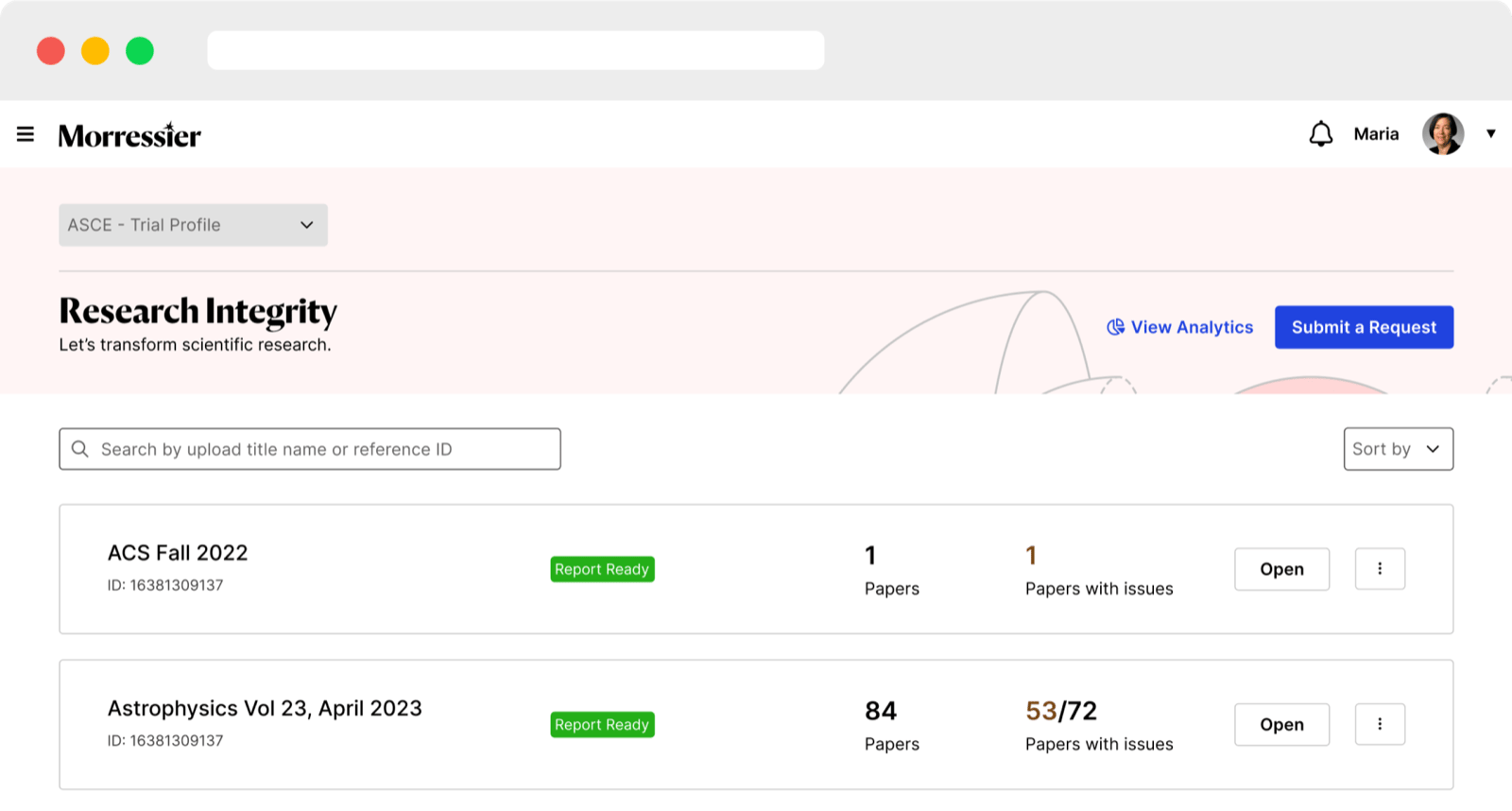
Morressier's existing product, Proceedings Manager, already ran a few content checks at hand-off. The new team's brief was broader: a specialised AI system that protects research owned by publishers and institutes, with preflight checks (is the paper complete and well formed?) and integrity checks (is anything about it suspicious?) in one place.
I was the founding designer for the Research Integrity product, working with two full-stack engineers, a QA engineer, a product manager, an engineering manager and a user researcher shared across the company. The product's first customers included ASCPT and the SAE.
Strategy to launch
Start lean: a focused set of checks, third-party providers aggregated behind one report, and real customer feedback before building the workspace. A series of workshops turned that into the How-Might-We questions that steered the next fifteen months.
Rather than build every check ourselves, we partnered with existing providers and became the aggregator, which let us validate the idea with customers early and build anticipation in the market while refining the experience. The workshops left us with three groups of questions. Product: how might we combine different kinds of integrity checks into one seamless experience, make investigation faster, surface patterns of misconduct across submissions, and make checks proactive rather than reactive? Experience: how might we make switching from several tools to one feel natural, present complex issues clearly and actionably, help users feel confident in their decisions, and keep the learning curve short? Business: how might we show measurable value to publishers and make integrity a selling point for their journals?
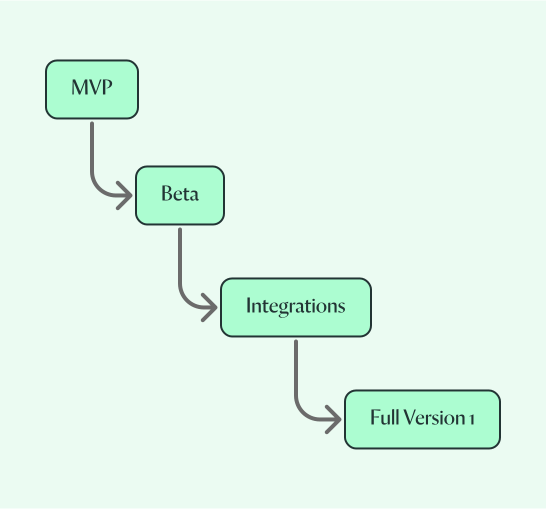
MVP
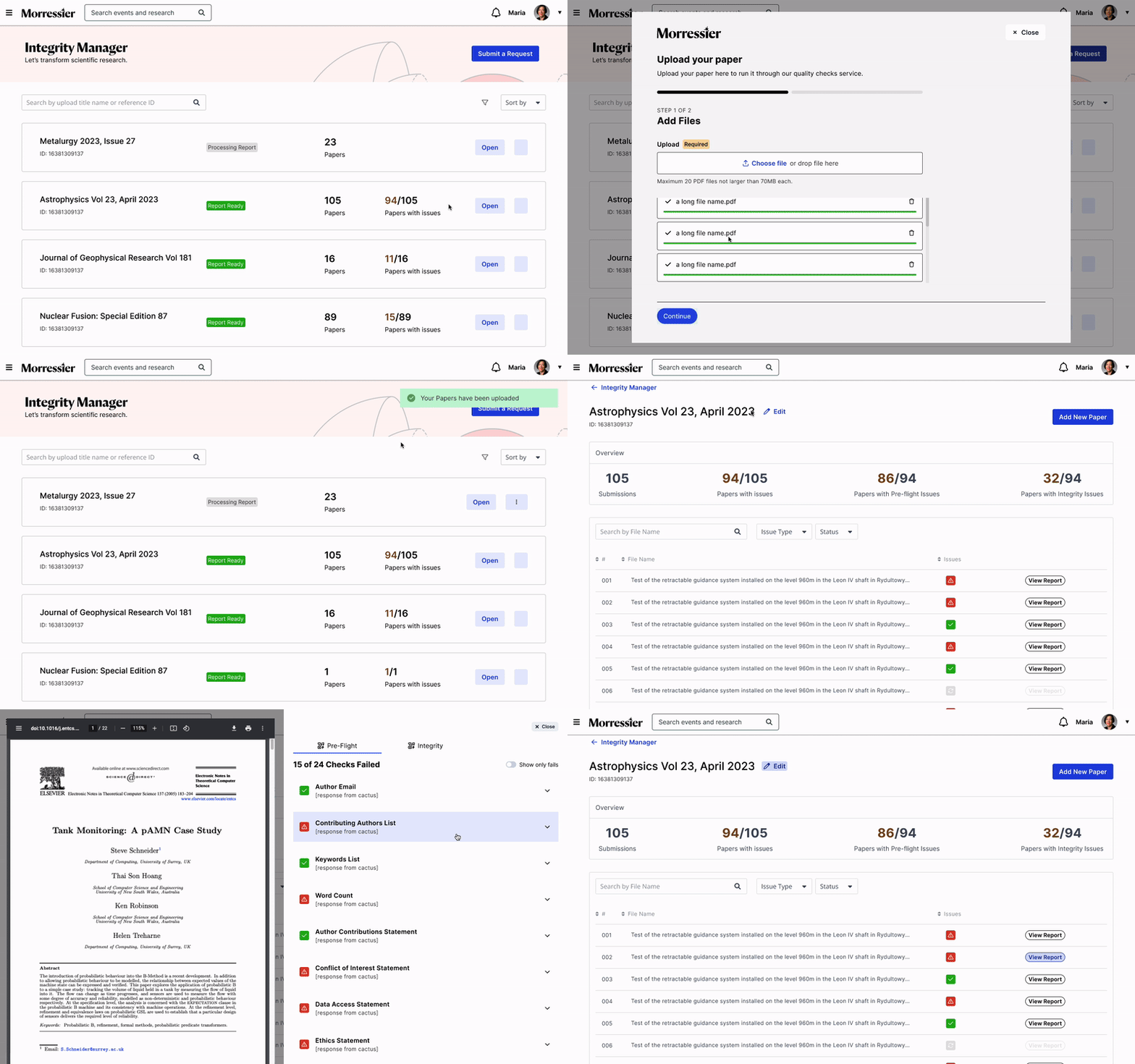
January to March 2023: individual upload and bulk upload for publishers, with PaperPal and iThenticate integrations, so a report could exist at all.
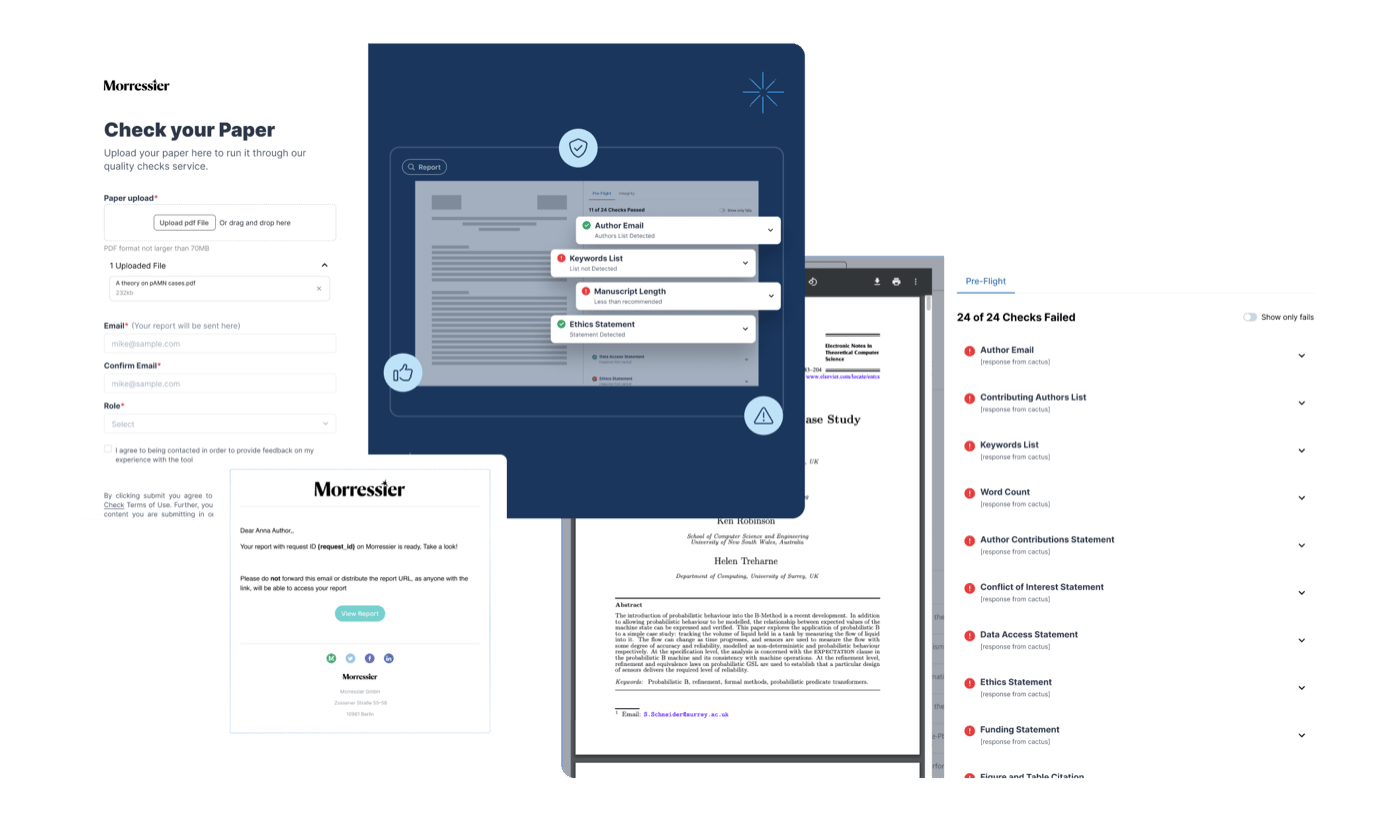
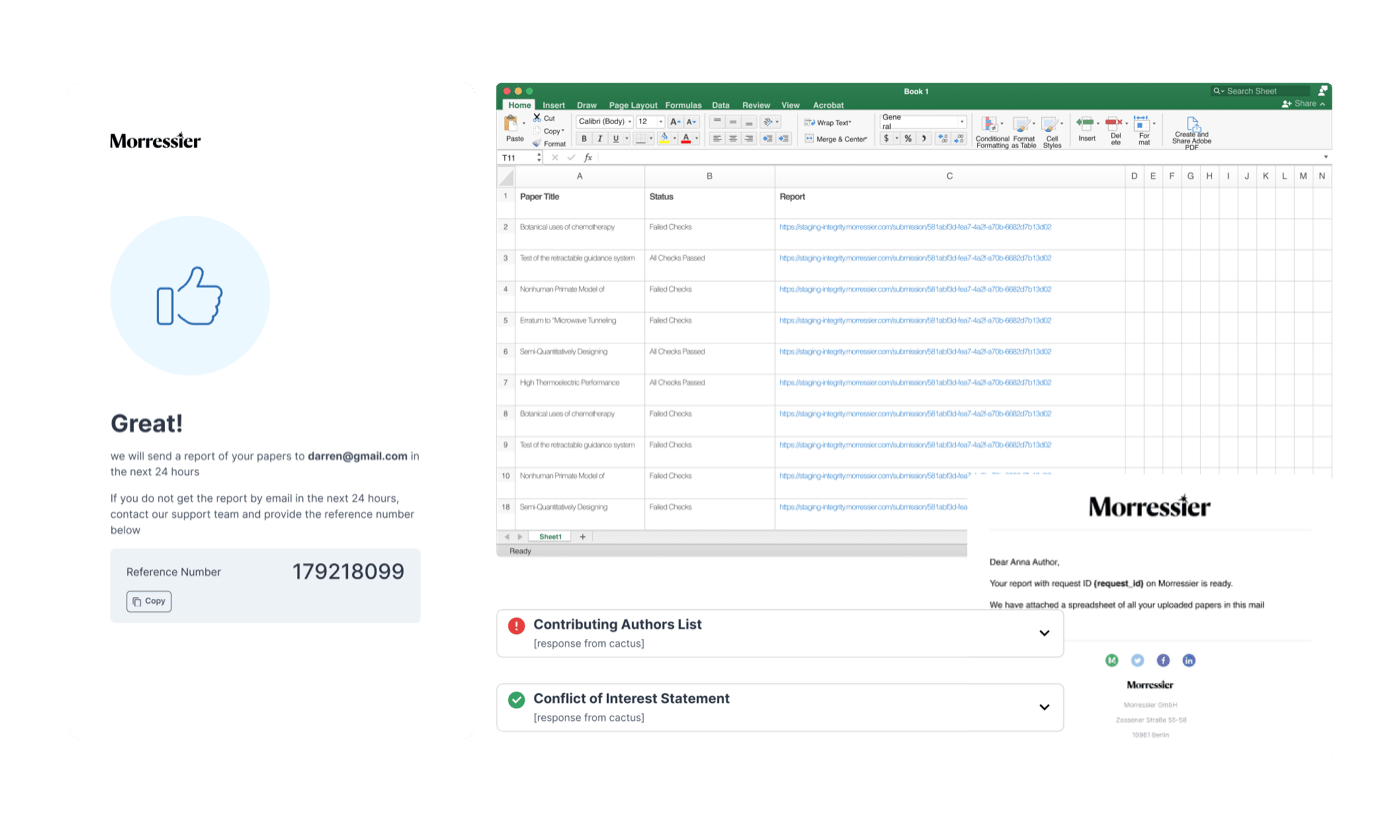
The MVP was deliberately plain. An author or editor uploads a PDF, chooses their role, and receives a report by email with a reference number; publishers could upload in bulk and get a spreadsheet of results. Behind it, the checks were a mix of our own and third-party services such as PaperPal and iThenticate, and the report listed every check with its response.
That plainness was the point: it let us learn which checks publishers trusted, how they wanted results delivered, and what they did next, before we built a workspace around it.
Beta
April to July: batch upload and a workspace management portal. Batch size went from 10 papers to 50, and processing a large batch from 24 hours to 3.
The MVP had taught us who the customer was. Individual researchers liked the tool but could not justify the cost for occasional use; publishers and societies had more complex needs and were willing to pay to protect their publication quality. So the beta pivoted to institutional users. Batch upload became a dashboard: users could watch a batch process, see how many papers passed or failed, and name batches themselves instead of tracking submission IDs in a spreadsheet.
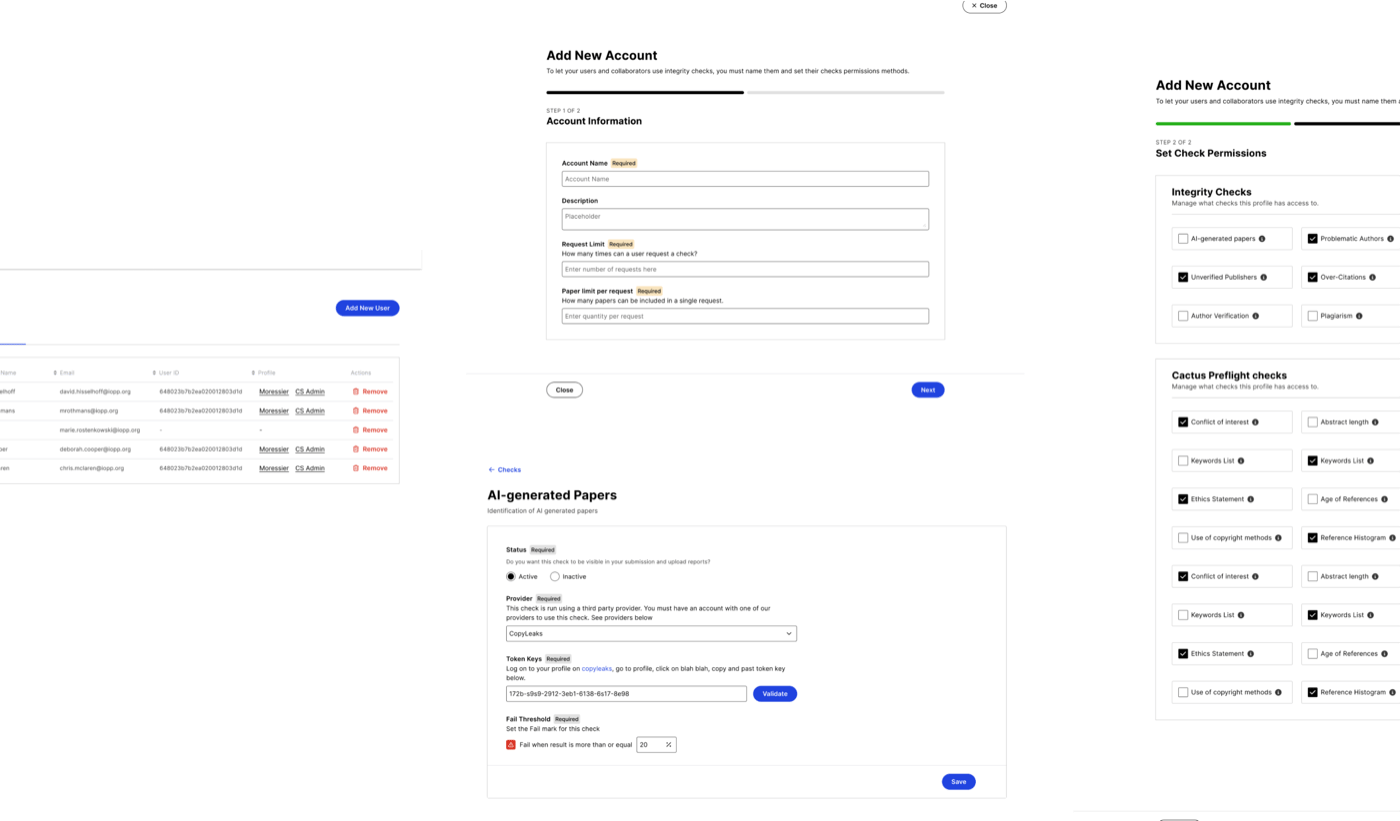
The beta also introduced workspace management for our internal team. Two configuration needs came straight from customer conversations: publishers wanted to pay only for the checks they used, so checks had to be switchable per workspace; and they wanted their own thresholds, since a 20% similarity score is a flag for one publisher and acceptable for another. A management portal let customer success control both per publisher.
Into Proceedings Manager
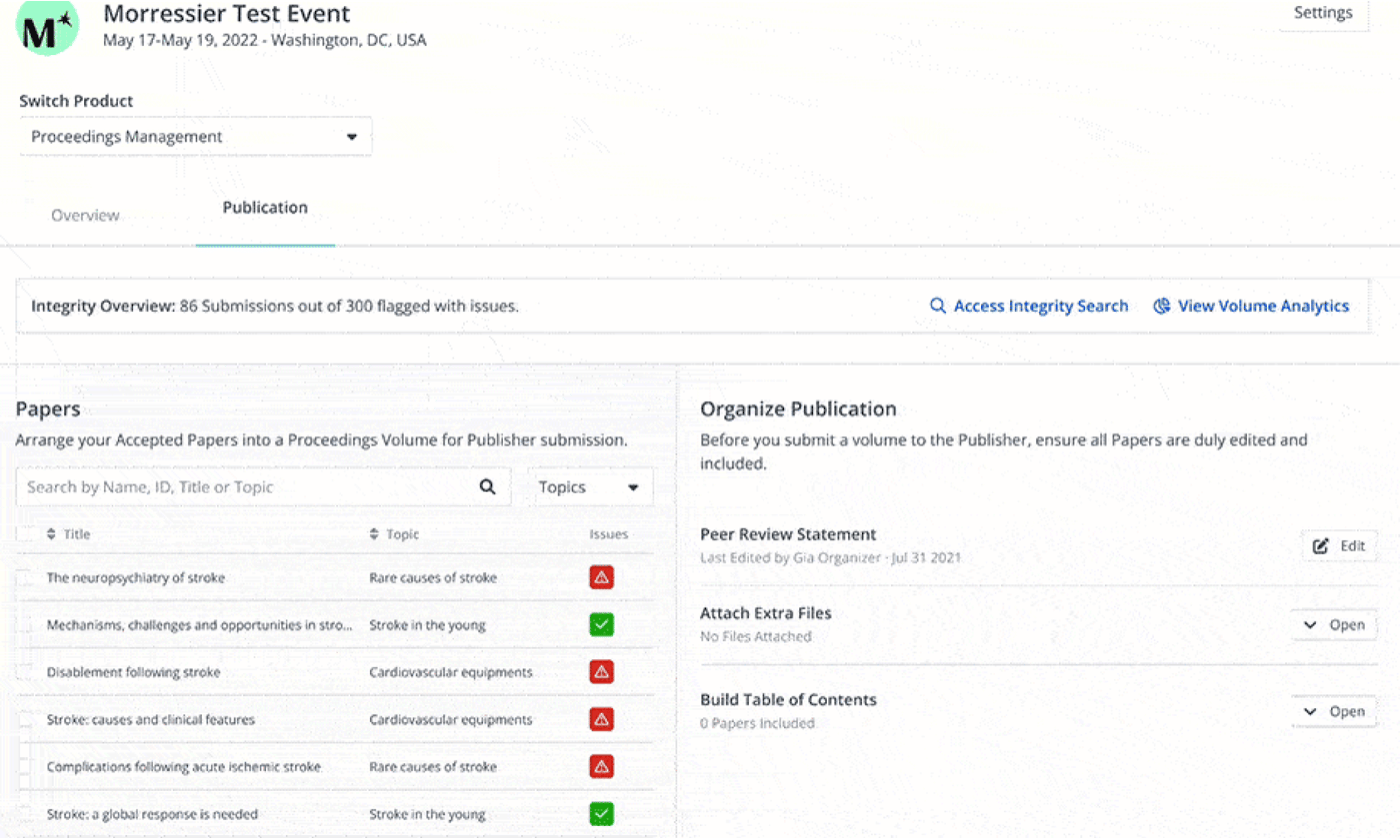
August to October: the checks moved into the conference platform publishers already used, so integrity became part of the existing workflow rather than a separate destination.
Organisers reviewing a volume for publication now saw an integrity overview, the number of submissions flagged, and could open the search or volume analytics without leaving the hand-off flow. Each paper in the table carried its integrity status beside its topic.
Full product
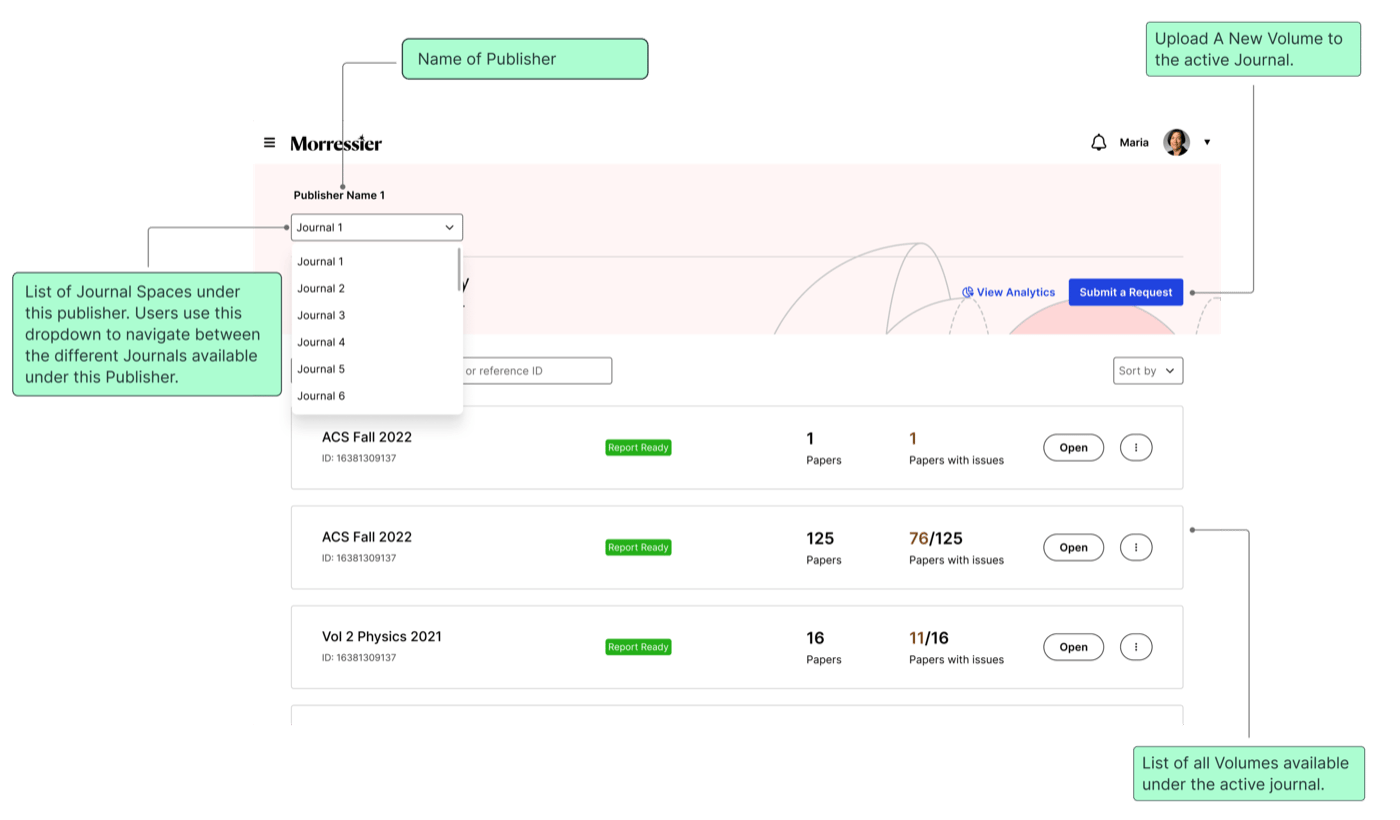
October 2023 to March 2024: the publisher › journal › volume › paper hierarchy and analytics, which set up the actionability work that followed.
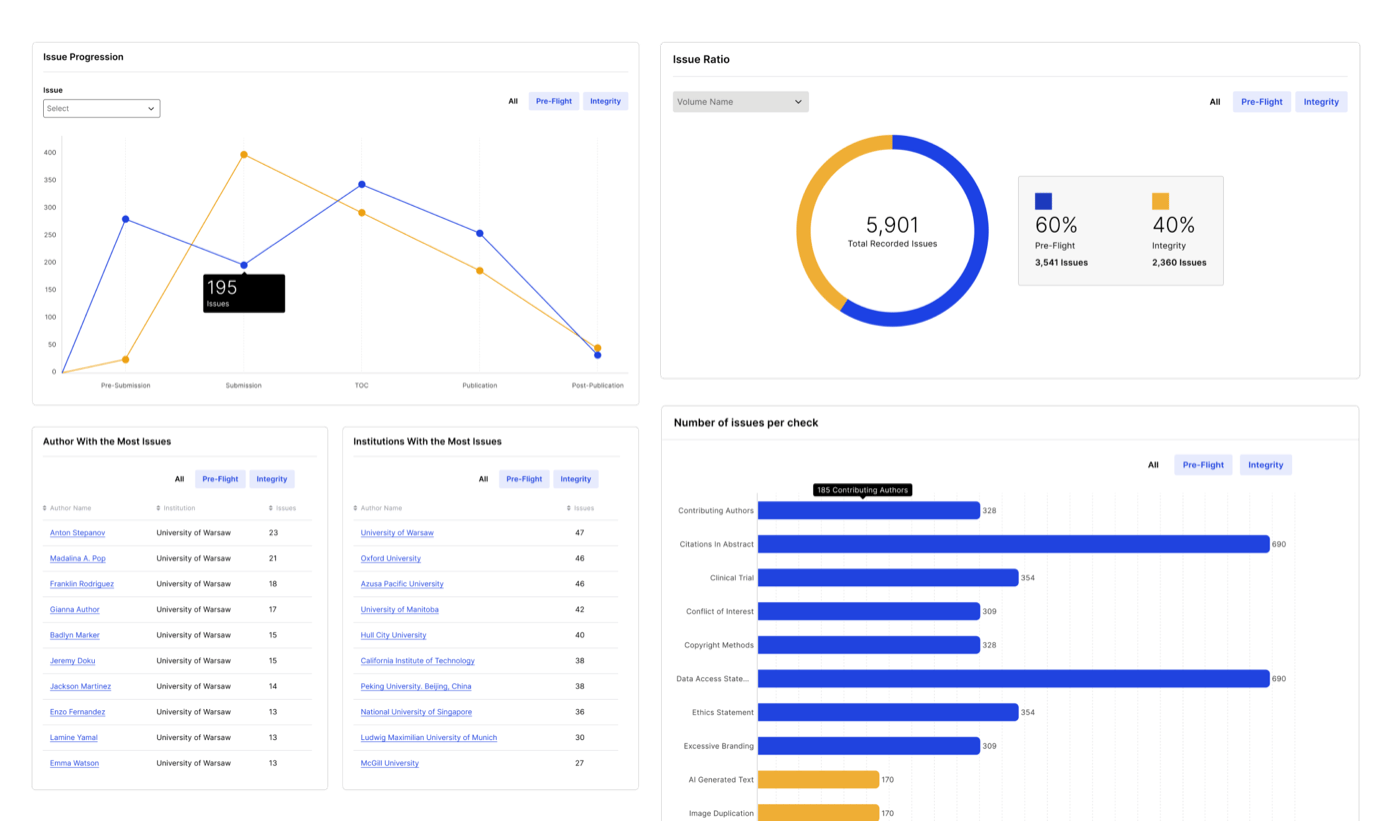
Publishers think in journals and volumes, so the product learned to. A publisher's space lists its journals; each journal its volumes; each volume its papers with issues. Analytics sit at every level: issue progression over the publication lifecycle, the ratio of preflight to integrity issues, the authors and institutions with the most issues, and issues per check.
Results
Three existing customers chose the integrated package, a sales pipeline of about $4M, and the product that carried the Series B. The ALPSP shortlist and the acquisition by Molecular Connections came later, on this foundation.