Proceedings Manager
Morressier · Senior Product Designer · UX Researcher · 2021–2023
- Scope
- Peer review, supplementary materials, content checks, roles
- Team
- 6 engineers, QA, data engineer, PM, EM, user researcher
- Timeline
- Aug 2021 – Jan 2023
Outcomes
- 8
- publisher deals closed
- 75%
- less time assigning reviewers
- 24 h → 50 min
- metadata for 150 papers
Context
Proceedings are snapshots of science in motion: the first public record of work that may later reshape a field. Publishing them takes organisers, editors, section editors, reviewers, publisher representatives and authors, each with different tools and permissions.
In 2021 the landscape had four problems. Expensive misfit solutions: journal platforms forced onto conference workflows, with steep learning curves and price tags, or custom systems that did not scale. Fragmented tools: three or four disconnected systems per organiser, for submissions, reviews, author communication and final preparation. Manual processing: papers by email attachment, versions in spreadsheets, review progress in email chains. Quality-control gaps: journals had verification processes, proceedings often did not, so publishers had little visibility into what they were agreeing to publish.
Proceedings Manager sat in the gap between file management and heavyweight publishing systems. I joined after its first release as Senior Product Designer and UX Researcher on a team of three backend and three frontend engineers, a QA engineer, a data engineer, a product manager, an engineering manager and a shared user researcher.
Strategy
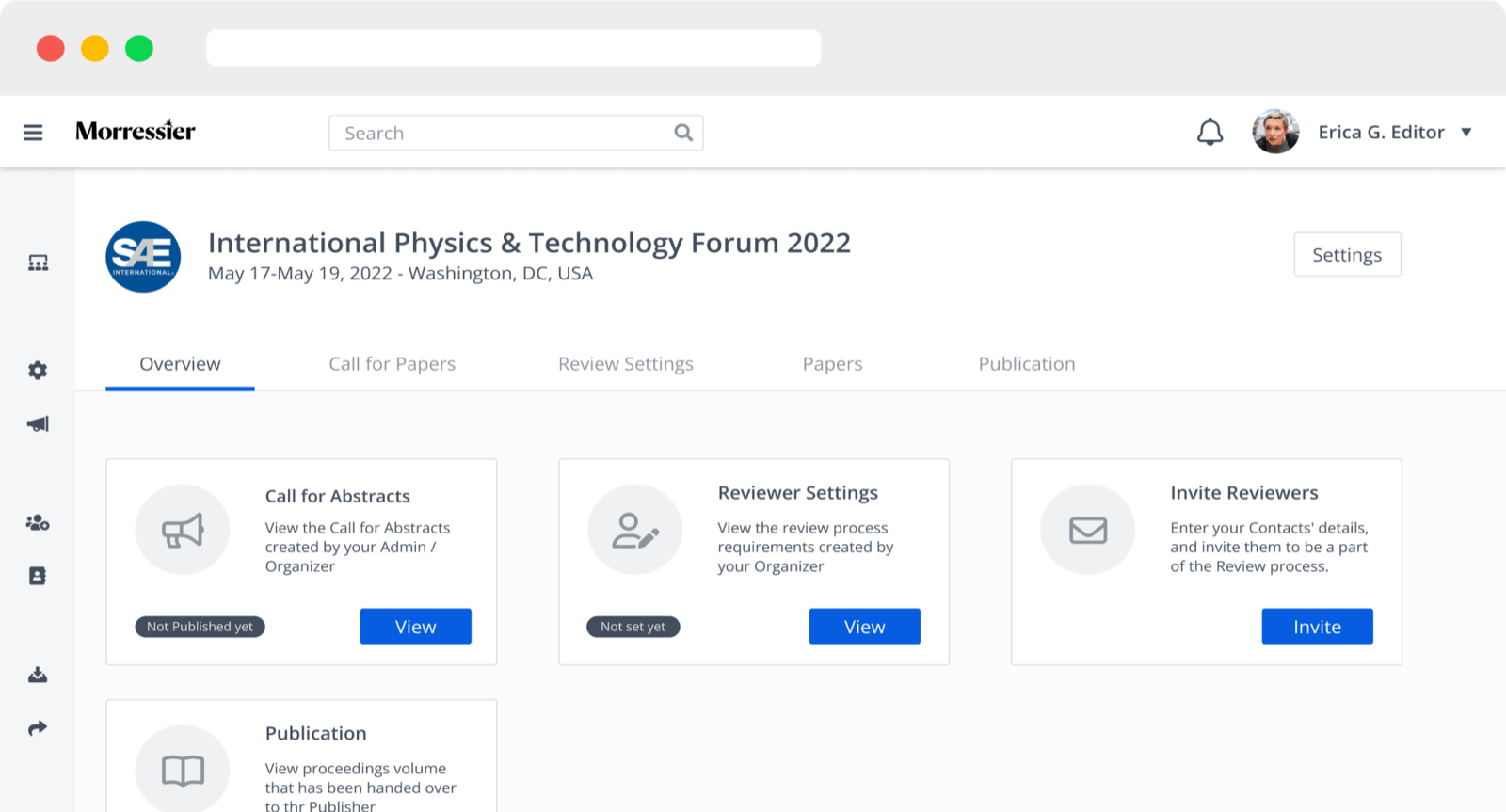
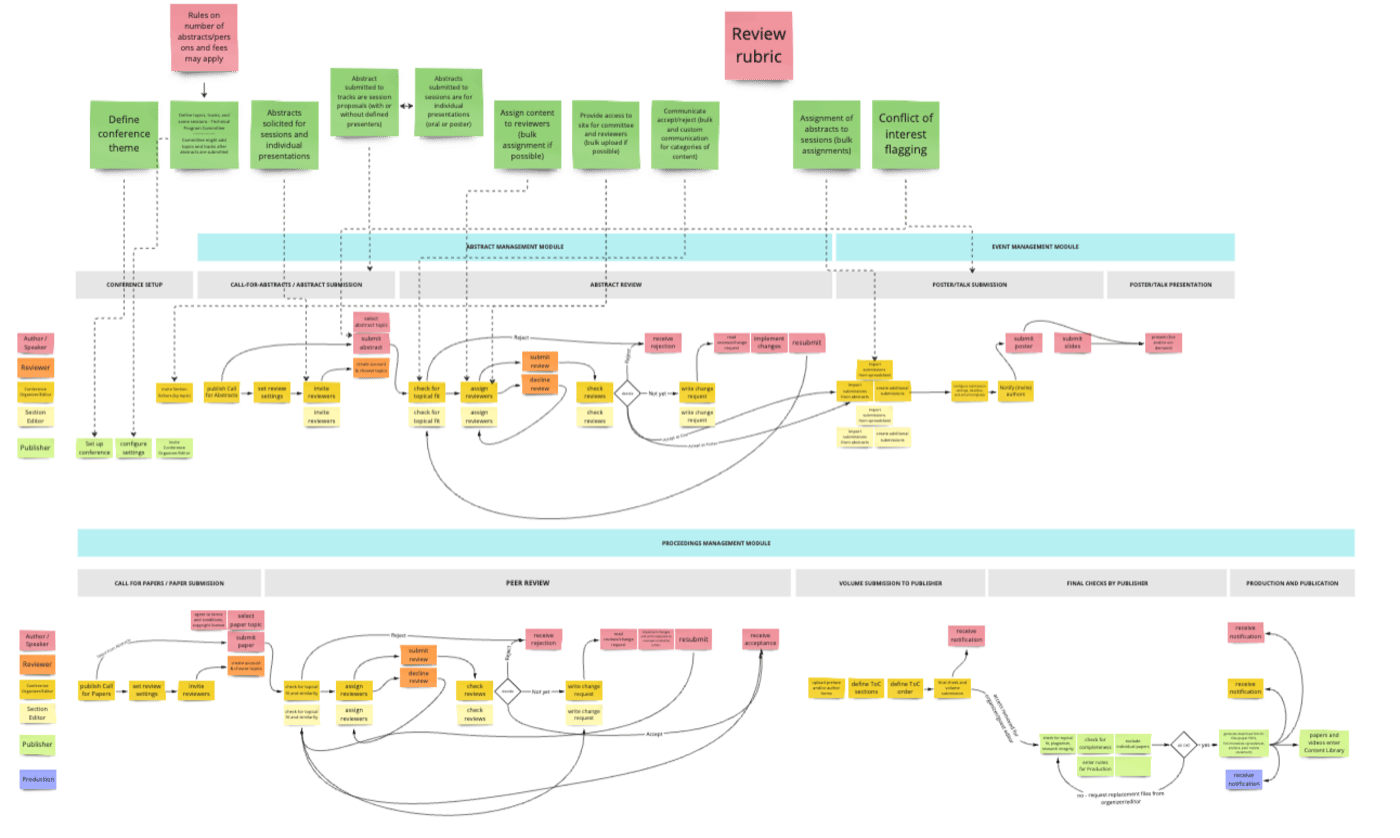
Workshops with product, customer success and sales mapped the proceedings lifecycle and set three priorities: streamline the publisher hand-off, add flexibility to peer review, and improve collaboration through user management.
Rather than rushing to add features, we mapped the whole lifecycle on Miro boards, from paper submission to final publication. Customer success brought what users struggled with daily; sales brought what prospects asked for and what blocked deals. Five workflows needed work: submission and metadata extraction, quality checks, peer review, team collaboration and oversight, and the publisher hand-off.
Supplementary materials
Prefaces and editorial notes belong in the publication; consent forms and open-access receipts are legal requirements. A two-tier structure separated them, and auto-matching linked legal forms to their submissions.
August to October 2021. The platform already accepted supplementary files, but the real needs were more specific. A standalone Peer Review Statement section reflects its importance in validating proceedings. Attach Additional Files splits into files that go into the published volume (prefaces, editorial notes, volume-wide content) and copyright and legal forms (publisher consent, open-access agreements, compliance documents), with auto-matching that connects each form to its submission so nothing is missed at hand-off.
Content checks
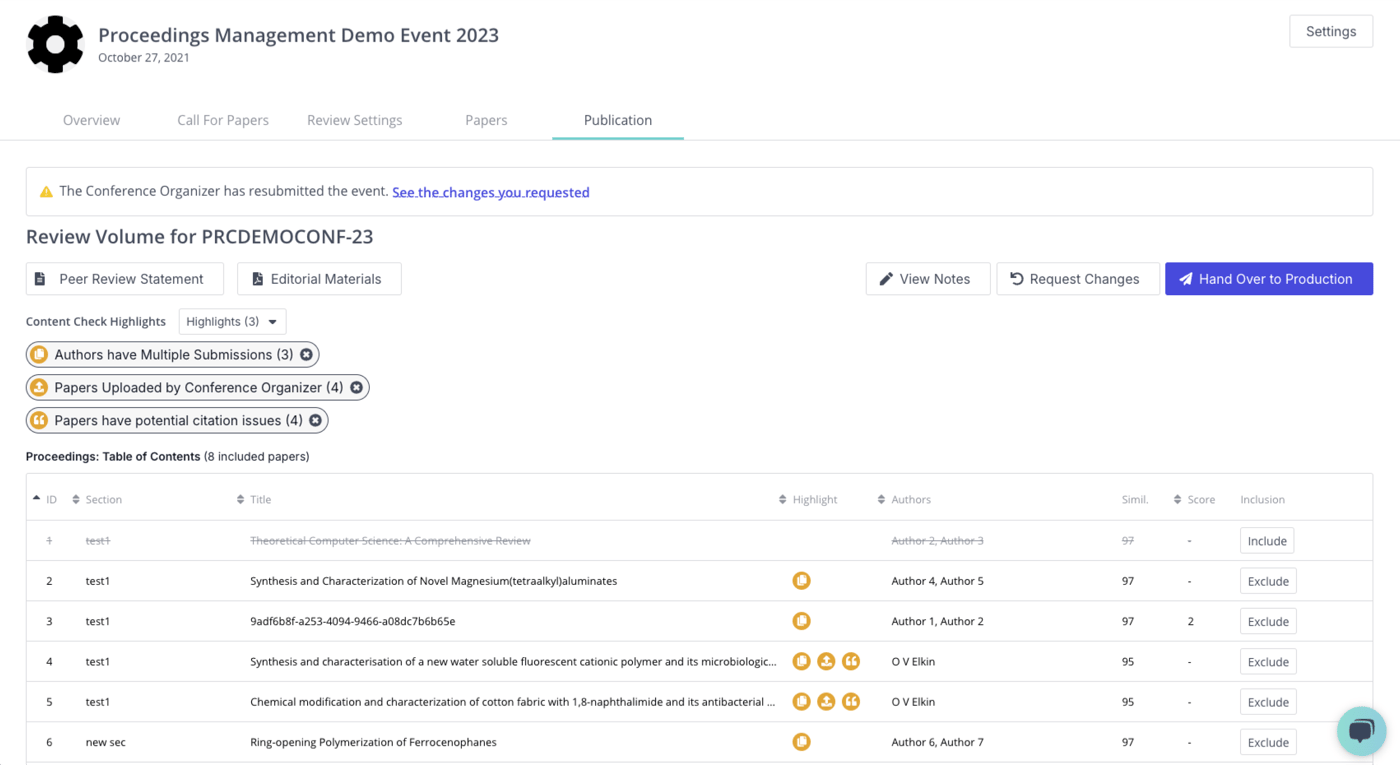
After rebuilding metadata extraction, we introduced the first checks visible to publishers and organisers: manual-upload detection, author pattern analysis and citation pattern detection. This is the seed of the later Research Integrity product.
November 2021 to January 2022. Better metadata extraction was groundwork rather than a feature: it enabled validation, search and insight later. The first checks were deliberately lean and visible only to publishers and organisers. Manual-upload detection flags papers that bypassed the submission flow. Author pattern analysis flags authors with several papers in one volume, which can mean preferential selection. Citation pattern detection looks for authors who dominate a paper's references and for organisers or editors being cited, both signals of possible bias.
Peer review
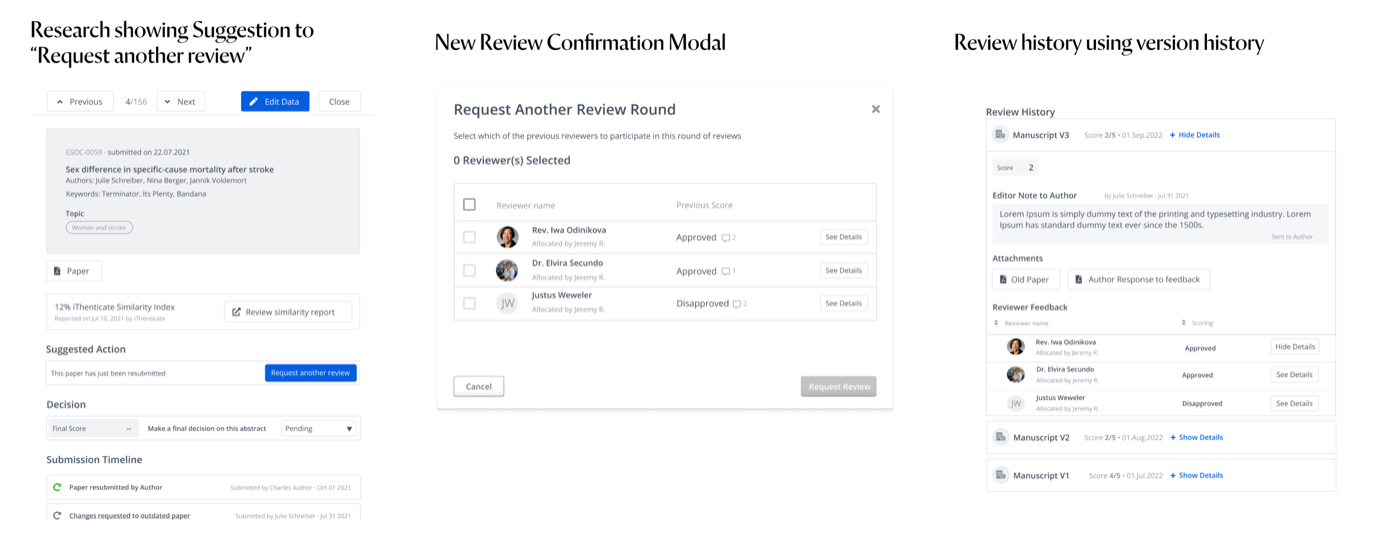
Automatic reviewer assignment by expertise, workload and conflicts, with organisers able to override; multiple review rounds that include only the reviewers who asked for changes; and full version history as an audit trail.
February to August 2022. Societies that publish several conferences a year manage reviews for hundreds of thousands of papers; matching expertise, balancing workloads, tracking rounds and keeping a record all grow with volume. Automatic assignment suggested reviewers from domain knowledge, current load and conflicts, and organisers could adjust the suggestions.
Validation is rarely one pass. A paper with three reviewers, two of whom requested changes, can go to a second round with just those two. Each round preserves previous reviews, feedback and decisions, so the history shows how a paper evolved and who took part, which proved invaluable for final acceptance decisions.
Roles and collaboration
Everyone had access to everything. Section editors changed that: a scoped view of their topic, their own reviewer networks, and a framework that later extended to reviewer pools.
August to December 2022. The Editor-in-Chief oversees the whole proceedings but relies on domain experts for specific tracks. Section editors see only the papers in their topics, manage reviewer assignment and communication there, and make recommendations about publication. The role framework was built to extend, and reviewer pools mapped to topics followed the same structure.
Results
Eight closed deals with medium and large publishers, reviewer assignment time cut by 75 percent, and metadata extraction for a 150-paper batch down from more than a day to under an hour.