Source to Settle
Keystone Bank · Product Designer, at SBSC · 2020–2021
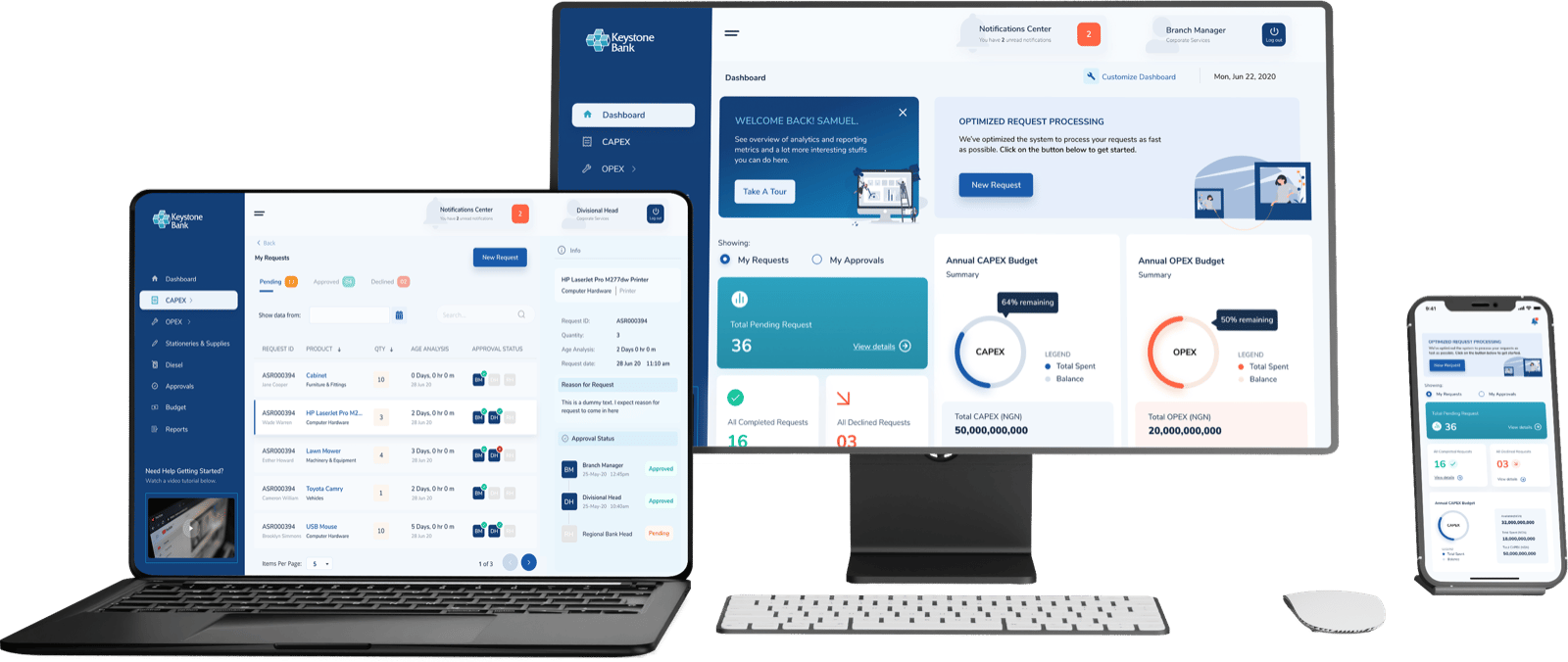
- Scope
- Research, flows, wireframes, design system, prototype, testing
- Team
- Designers, PM, business analysts at SBSC
- Client
- Keystone Bank Nigeria
Outcomes
- 154
- branches on one system
- 14
- users in two testing rounds
- up to 25%
- shorter procurement cycle, projected
Discovery
Calls with finance, operations, technology, legal, HR and logistics, plus interviews averaging half an hour, surfaced seven problems: manual process, scattered vendors, inventory blind spots, reconciliation gaps, compliance, opaque approvals and no reporting.
A commercial bank with branches across Nigeria, Keystone's scale magnified every weakness in a manual process. Vendors submitted quotes by email with no standard to follow, so quotes and payments were never in one place. Inventory, from office supplies to IT equipment, was tracked without forecasting, so branches over- and under-stocked. Payments to vendors were not reliably recorded, matched and settled, and both capital and operational expenditure went undocumented until audit time. Approvals ran through long email threads in which executives only learned of a purchase when asked to sign.
Each team got its own call with our designers, the project manager and the business analysts. Interviews, four in person and one online, averaged 32 minutes. The business goal was explicit: inventory accuracy to 95 percent, procurement budget adherence up 20 percent, and spending within budget, all in the first year. Three personas framed the work: a procurement analyst who evaluates vendors and negotiates contracts, an expense management officer who controls outgoing funds, and a financial controller responsible for planning, internal control and regulatory reporting.
Define
How might we streamline procurement, ensure compliance, manage budgets and inventory accurately, and give every level of the hierarchy oversight with secure approvals?
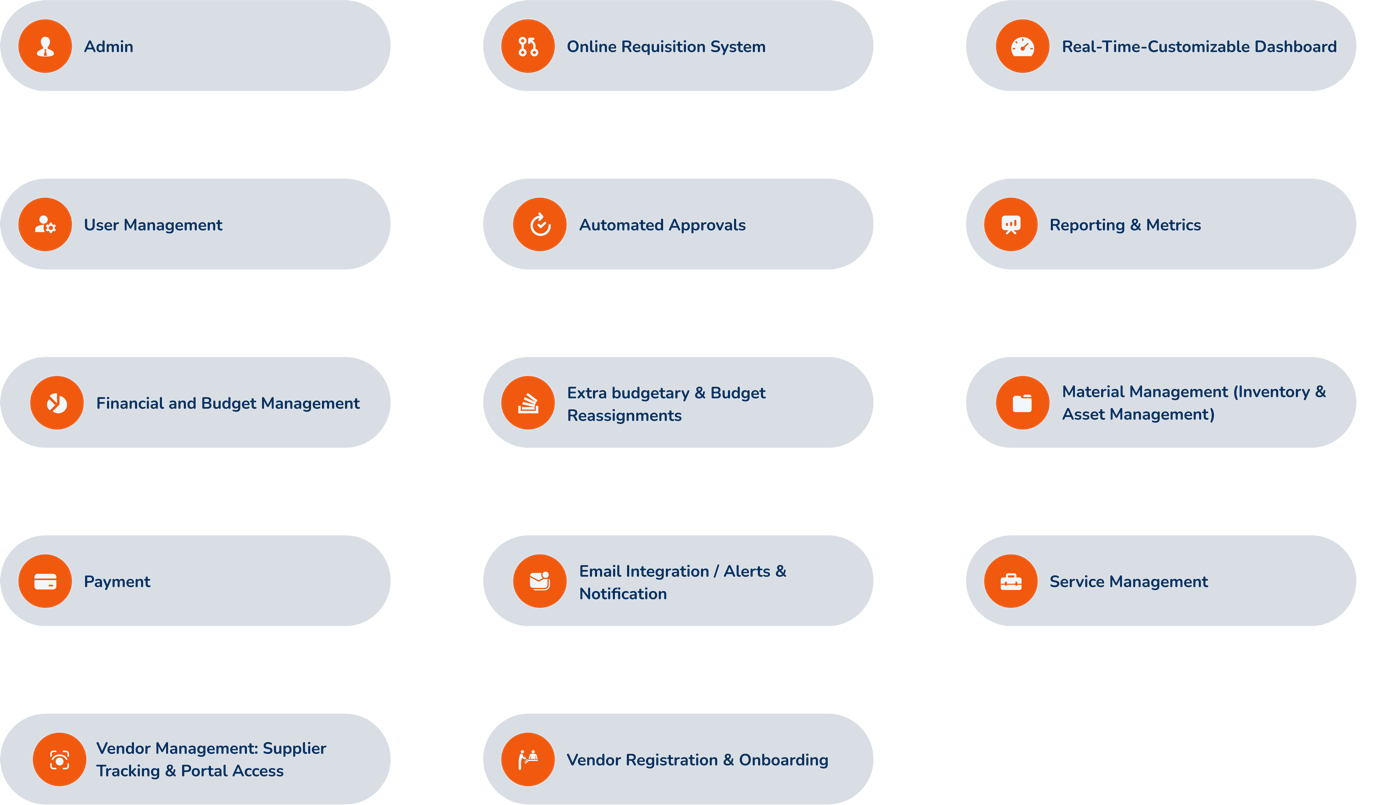
Three themes: consolidate several applications into one, give everyone real-time data and tracking, and shorten the approval timeline. Admin and procurement wanted a streamlined workflow with compliance monitoring; finance wanted real-time budget tracking and automated reconciliation; the controller wanted executive oversight and secure approvals. A brainstorming session with the application owners, guided by a decision matrix, turned that into the feature map and the flows.
Design
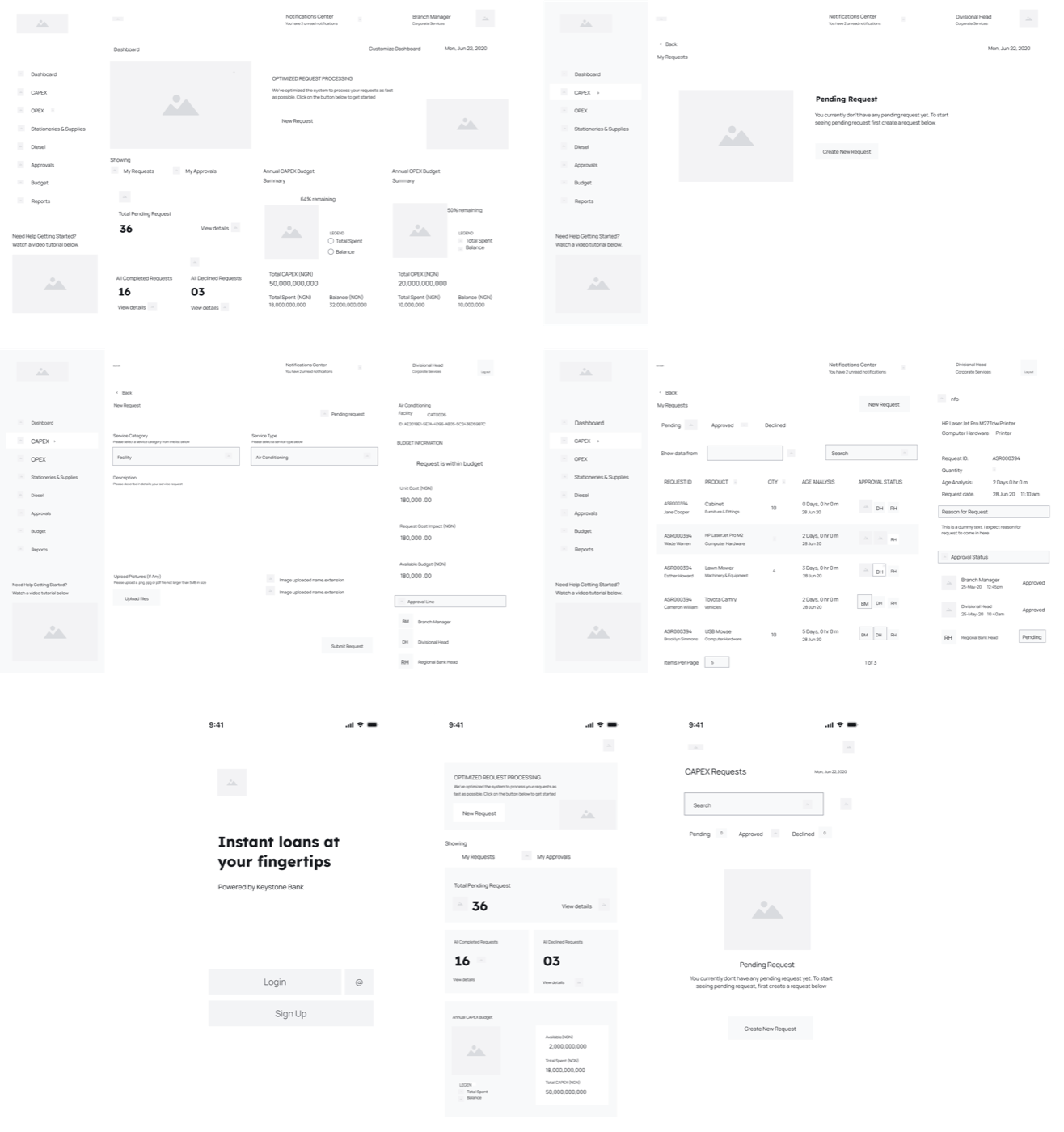
Sketches to wireframes to a design system, then the flows that matter: sign in, requests, a new request, manager approve or reject, dashboards for managers and CFOs, and vendor management.
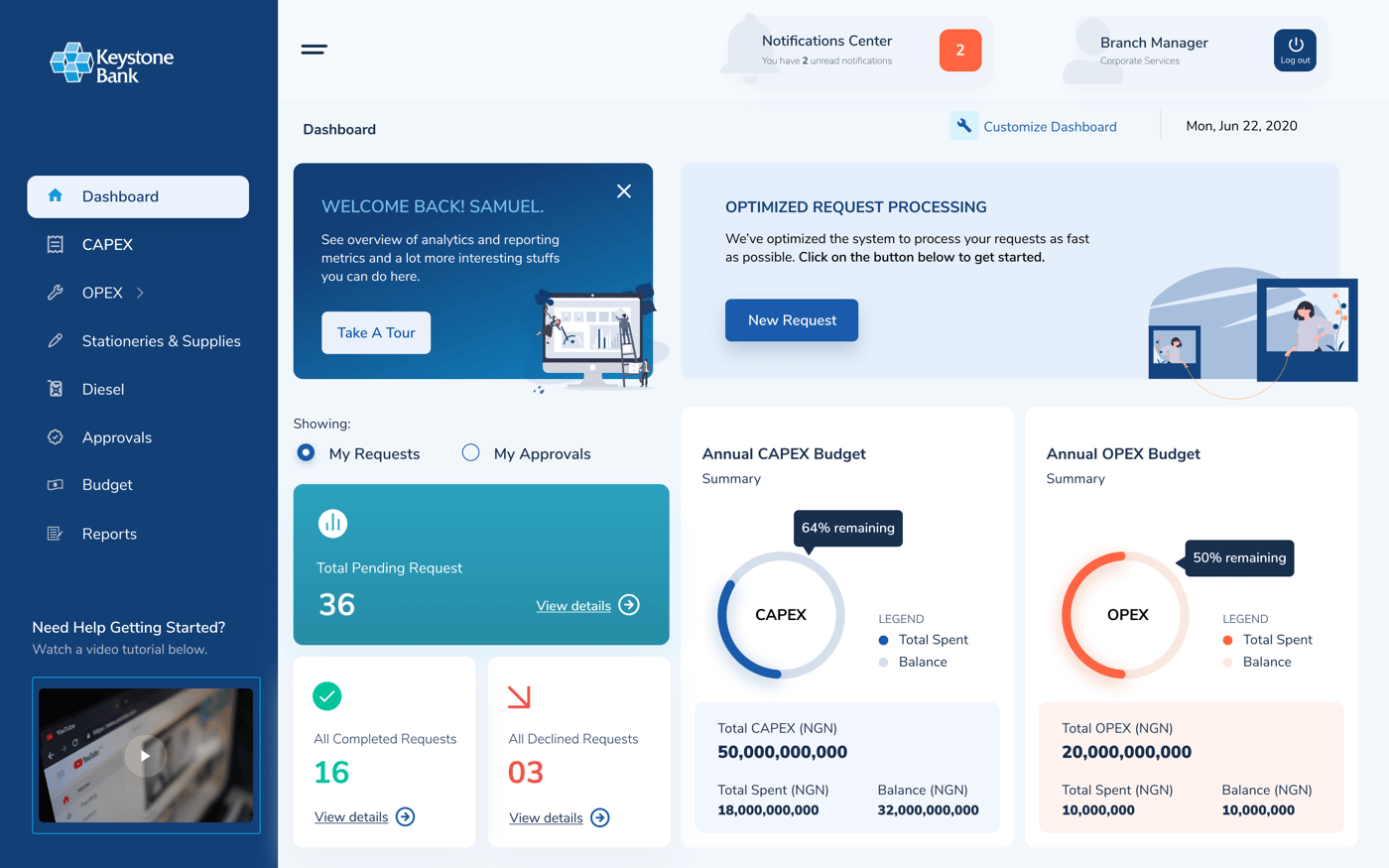
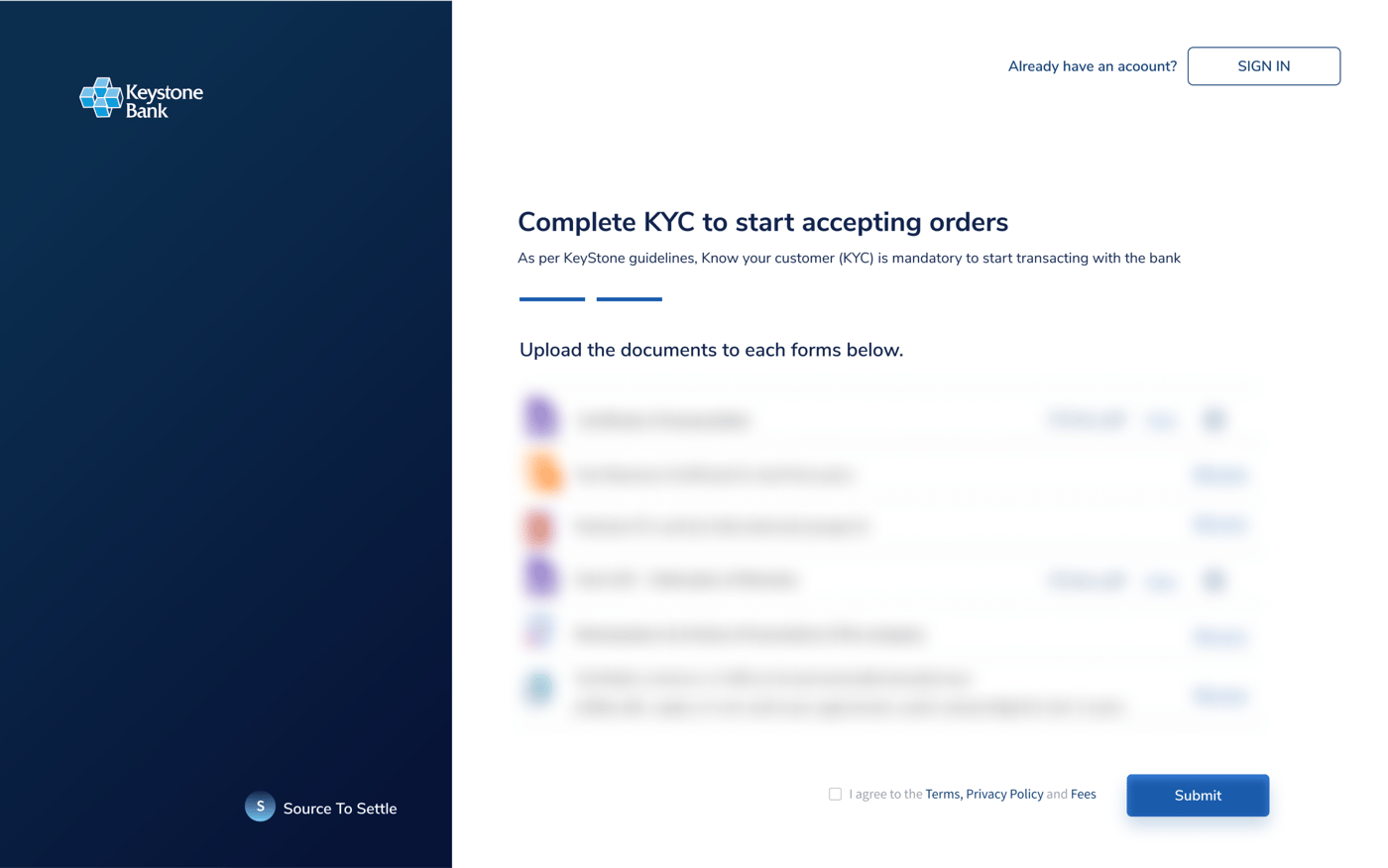
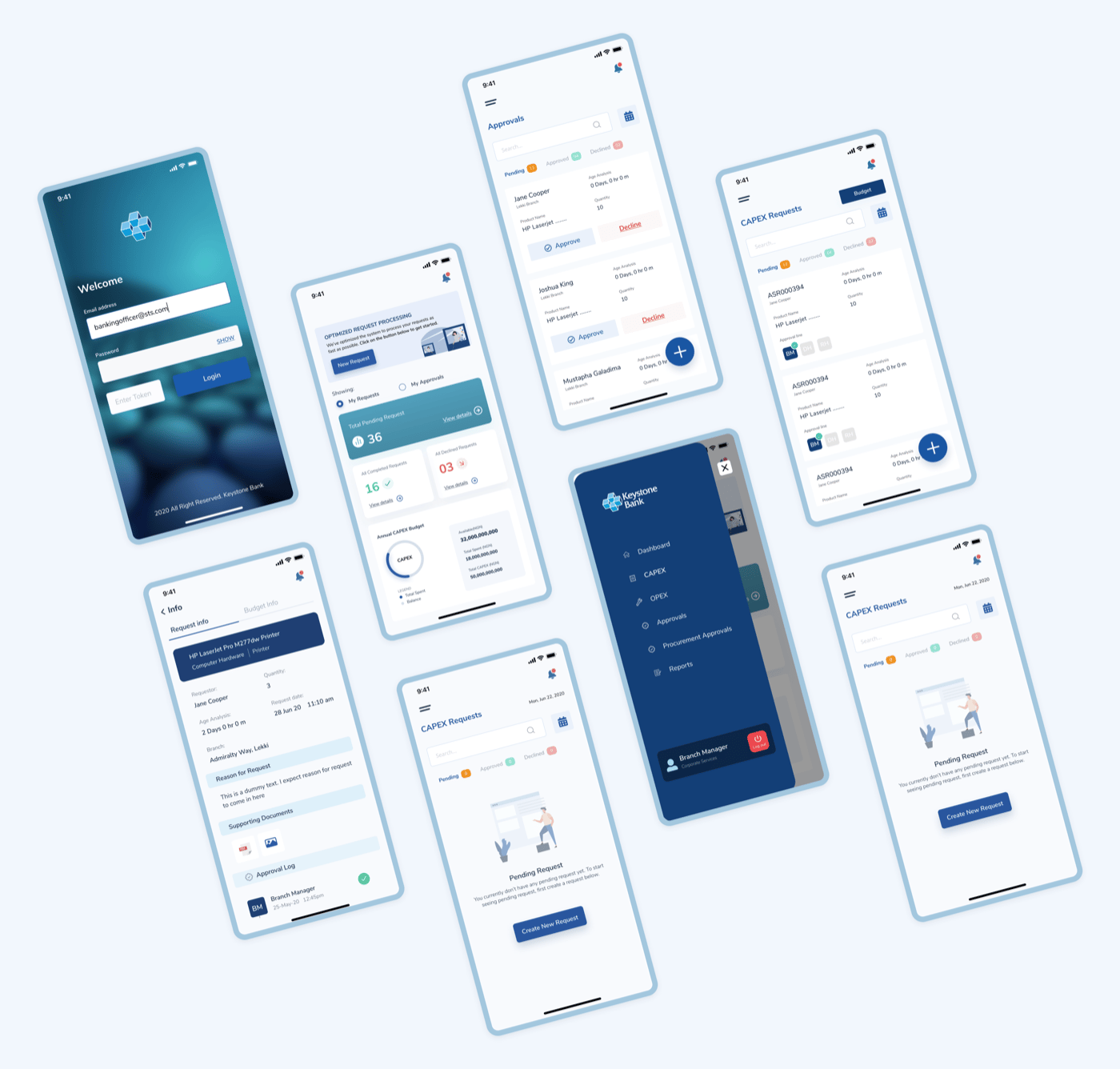
Requests are the heart of the product: a branch manager raises one with the reason and documentation, it moves up the approval line, and every status change is logged. Dashboards show pending, completed and declined requests and the annual CAPEX and OPEX budgets with what remains. Vendors onboard with KYC documents before they can accept orders. The same flows work on mobile, so approvals are not stuck at a desk.
Results
Two rounds of testing with fourteen users: faster task completion, fewer follow-ups chasing approvals, and a projected procurement-cycle reduction of up to a quarter from the process changes users suggested.
Testing checked whether users could complete the key tasks and how they moved through the prototype. Navigation was easier after the usability changes, satisfaction was high, and queries and follow-ups for approvals dropped noticeably, which pointed to fewer support calls. Some details in this study are adjusted or withheld for client privacy.